- Identify vented versus purpose-built ventless before tracing the air.
- The screen, cabinet, connection, duct and outdoor end are distinct care and assessment locations.
- Longer drying has several possible explanations; a warm drum or moving flap is not an airflow measurement.
- Urgent fire, CO or gas response comes before observation or troubleshooting.
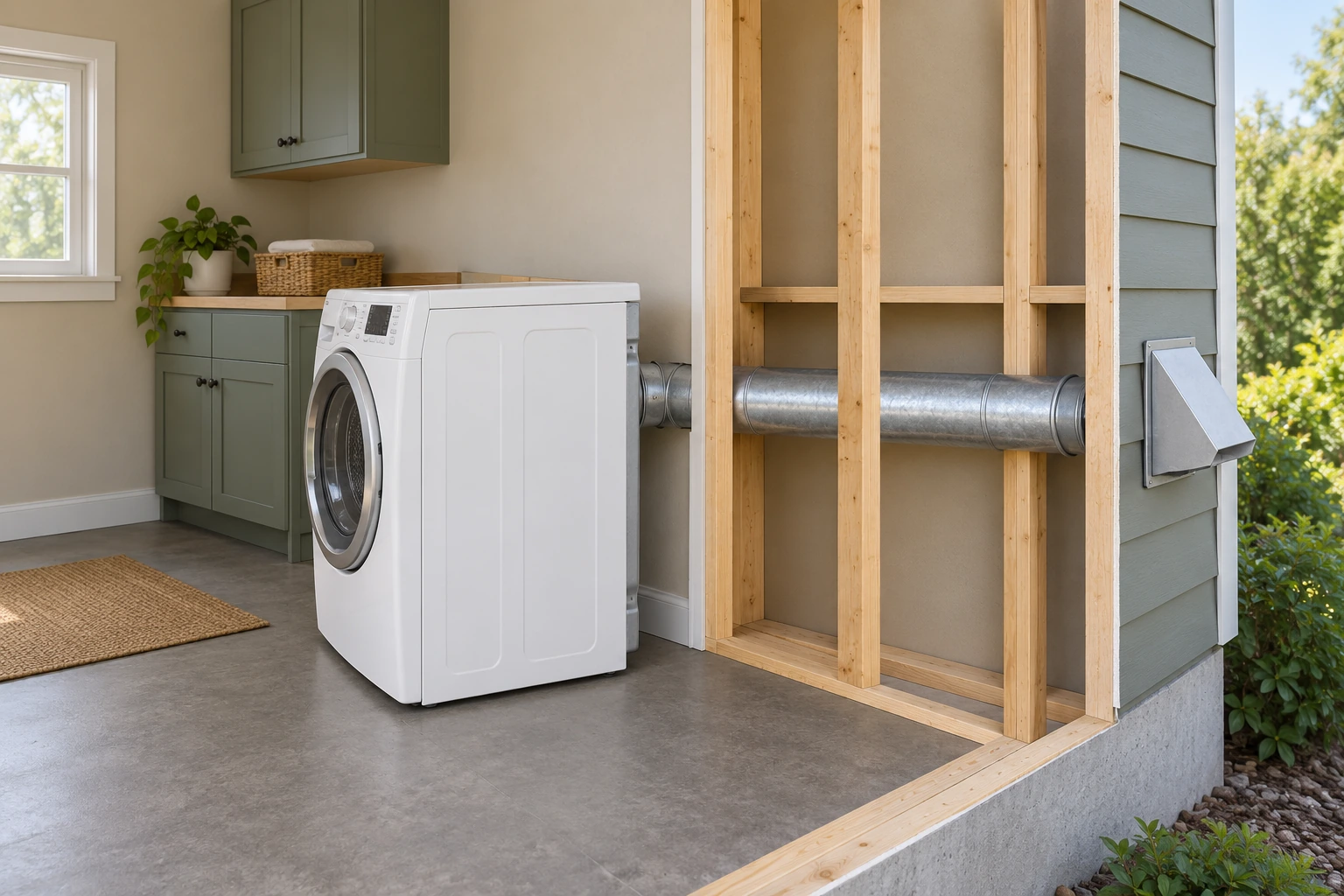
The exposed room connection and the wall cutaway show why a visible hose is only part of the route.
About this illustration
Actual connectivity, material, condition, airflow and model suitability are not established by this picture. This is a conceptual teaching model, not an assessment of your home.
4 picture lessons appear beside the questions in this guide. Use them to understand the explanation, then consider what it means for your home.
Does this dryer send air outdoors or reuse it?
If a CO alarm sounds, leave immediately for fresh air. Do not search for its source. Call emergency services from outside and return only after a professional has fixed the problem. If gas is suspected, leave without using indoor phones, switches or ignition sources; call the applicable utility emergency line or emergency services from outside.
For routine learning, identify the installed dryer first. A vented dryer sends drying exhaust through a connected route outdoors. It can be electric or fuel-burning. Electric describes an energy source; it does not tell you that the appliance is ventless.
A purpose-built ventless heat-pump dryer uses a refrigeration system to dry and recycle air. Whirlpool describes this distinct product arrangement. It is not the same as disconnecting a vented dryer and letting its exhaust enter the laundry room. Its filters and collected-water handling need its own model instructions.
Use the model, matching manual and existing installation record to name the arrangement. Leave fuel or concealed connections unknown until established. A wall opening, a water container or the appliance’s appearance alone cannot identify the entire system.
Does this dryer send air outdoors or reuse it?
One dryer sends drying air outdoors. A purpose-built heat-pump dryer removes moisture and reuses air.
Numbers identify the parts explained below.
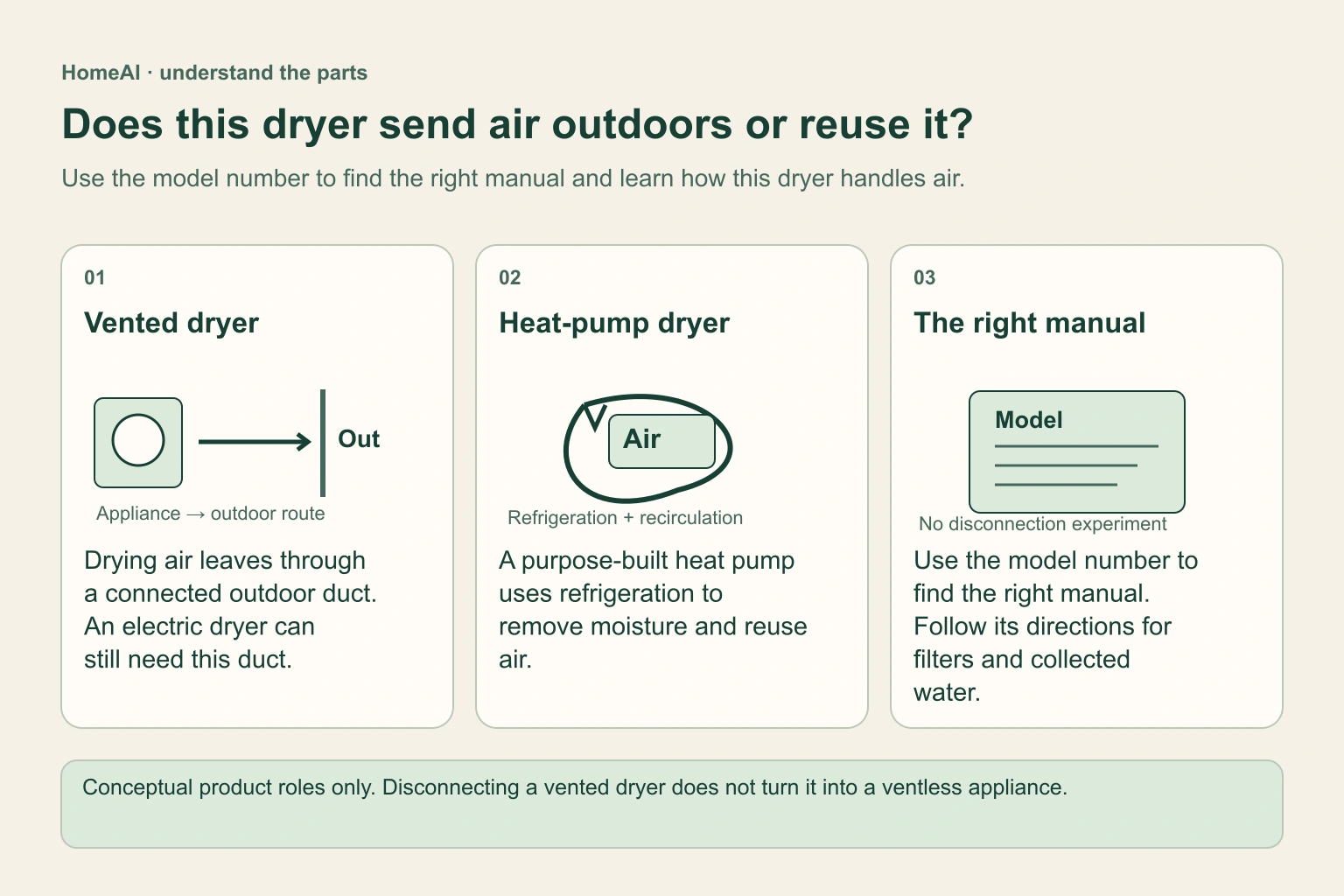
- Vented dryer
The identified appliance sends drying exhaust along a connected route outdoors. Electric or fuel-burning equipment can have this arrangement.
- Purpose-built heat-pump dryer
The refrigeration system dries and recycles air. Filters and collected-water handling belong to this specific product’s instructions.
- Find the right manual
Use the model number to find the right manual. It explains whether the dryer needs an outdoor duct and how to care for its filters and collected water.
What does this illustration leave out?
The installed model, fuel, route and required care still need identification. Disconnecting a vented dryer does not create a ventless appliance. Conceptual product-role comparison, using the reviewed Whirlpool manufacturer bodies within their model limits. Emergency action takes priority over routine learning.
Which matching product instructions establish whether this appliance needs an outdoor exhaust route?
Explore this with HomeAI ↗Opens an editable question. Nothing is sent until you choose to send it.Read the complete picture lesson
Does this dryer send air outdoors or reuse it?
Urgent response comes first: If a CO alarm sounds, leave immediately for fresh air. Do not search for its source. Call emergency services from outside and return only after a professional fixes the problem.
For suspected gas, leave without indoor phone use, switches or ignition sources. Call the applicable gas emergency line or emergency services from outside.
For fire or smoke, leave, stay clear and call emergency services from outside.
A vented dryer and a purpose-built ventless heat-pump dryer have different air-handling arrangements. Identify the product before deciding which route and care questions apply.
- Vented dryer
- The identified appliance sends drying exhaust along a connected route outdoors. Electric or fuel-burning equipment can have this arrangement.
- Purpose-built heat-pump dryer
- The refrigeration system dries and recycles air. Filters and collected-water handling belong to this specific product’s instructions.
- Find the right manual
- Use the model number to find the right manual. It explains whether the dryer needs an outdoor duct and how to care for its filters and collected water.
The reviewed Whirlpool heat-pump page describes a refrigeration system that dries and recycles air. A vented dryer instead needs its connected outdoor route. An appliance photograph or unused wall opening does not establish the model. Do not disconnect a vented dryer to create a ventless arrangement.
What remains unknown: No installed product identity, fuel, approved route, national installation allowance or converted-appliance procedure is supplied.
Useful next question: Which matching product instructions establish whether this appliance needs an outdoor exhaust route?
Name the appliance arrangement before tracing it
- Vented dryerDrying exhaust follows a connected outdoor route. · Fuel, route and installation suitability.
- Purpose-built heat-pump dryerA refrigeration system dries and recycles air. · Filters, water handling and operating instructions.
- Unconfirmed arrangementExisting appearance or an unused opening leaves questions. · Product identification; do not disconnect equipment to decide.
Why does drying need both heat and moving air?
Laundry starts with water in the fabric. In a vented dryer, heat and air movement help carry that moisture away through the exhaust route. A warm drum does not measure the air travelling through the duct. The heat source and the connected air path can need different service questions.
Longer drying can also involve a wetter load, fabric mix, quantity, washer spin or selected cycle. Describe what changed compared with ordinary earlier use. The same towel colour does not make two loads identical, and an automatic-cycle display is not a direct airflow measurement.
Record moisture noticed around the appliance as a separate observation, with its location and timing. An exhaust connection may need investigation, but another source may also fit. Do not convert room humidity into a diagnosis of a hidden duct disconnection.
Where does the visible connection go after the wall?
The short connection behind the dryer is one part of its air route. Beyond it, a duct may pass through concealed spaces before reaching an outdoor hood. The skeleton picture opens a conceptual wall so the relationship is easy to see; your actual hidden route still needs identification.
A nearby hood might serve another appliance. Ask which drawing, installation record or qualified assessment connects this dryer to that termination. Request the parts actually inspected and the portions left inaccessible. A room photograph shows only the connection and conditions inside its frame.
Whirlpool’s example manual identifies crushed or blocked venting as airflow concerns. That does not mean a longer cycle proves either condition. Do not pull a heavy appliance, disconnect gas, open walls or enter a ceiling space to fill a record gap yourself.
The room connection is only the first part of the route
The exposed room connection and the wall cutaway show why a visible hose is only part of the route.
Numbers identify the parts explained below.
- Room connection
A photograph behind the appliance covers only the connection visible within its frame.
- Concealed duct
The picture opens the wall for learning; the actual route needs records or qualified assessment.
- Outdoor end
Ask how the particular hood was identified as this dryer’s termination.
What does this illustration leave out?
Actual connectivity, material, condition, airflow and model suitability are not established by this picture. Original selective conceptual cutaway. Do not pull appliances, disconnect fuel equipment or open concealed spaces to recreate it.
What record or assessment connects this dryer to the full route and its outdoor end?
Explore this with HomeAI ↗Opens an editable question. Nothing is sent until you choose to send it.Why must the route be checked against the actual model?
The linked Whirlpool gas-dryer manual contains different ordinary and long-vent tables. The applicable table depends on equipment identity and the described route. A figure from the wrong table does not become a valid allowance because it appears in the same document.
Ask the qualified installer which instructions match the complete model and how the local requirements apply. Their assessment should identify the route, material, turns, access and termination. This guide supplies no national duct length, diameter, clearance or booster-fan recommendation.
When a dryer is replaced, ask whether its inherited route was included in the work. Appliance installed can mean a different scope from existing exhaust route assessed. Retain the actual findings and exclusions so the next owner can understand what was done.
Does cleaning the lint screen cover the whole system?
The lint screen catches material at its identified location. The dryer cabinet, connection, duct and outdoor hood are other locations. A clean screen tells you about that screen; it does not describe the condition of the route beyond it. Name these parts separately in your care record.
Toronto Fire Services advises following manufacturer care instructions. The reviewed Whirlpool manual separates ordinary screen care from internal cabinet and exhaust work by qualified personnel. Use the installed model’s schedule and access instructions; the example manual is not a universal Canadian maintenance procedure.
Record what was cleaned and when, then ask which remaining locations need service. Do not operate with a missing or damaged screen, insert tools into openings or remove panels to copy a cleaning procedure. A cleaning quotation should state included areas and access limits.
Screen, cabinet and duct are different care locations
The screen form, cabinet interior and continuing duct are distinct illustrated areas that can require different service scopes.
Numbers identify the parts explained below.
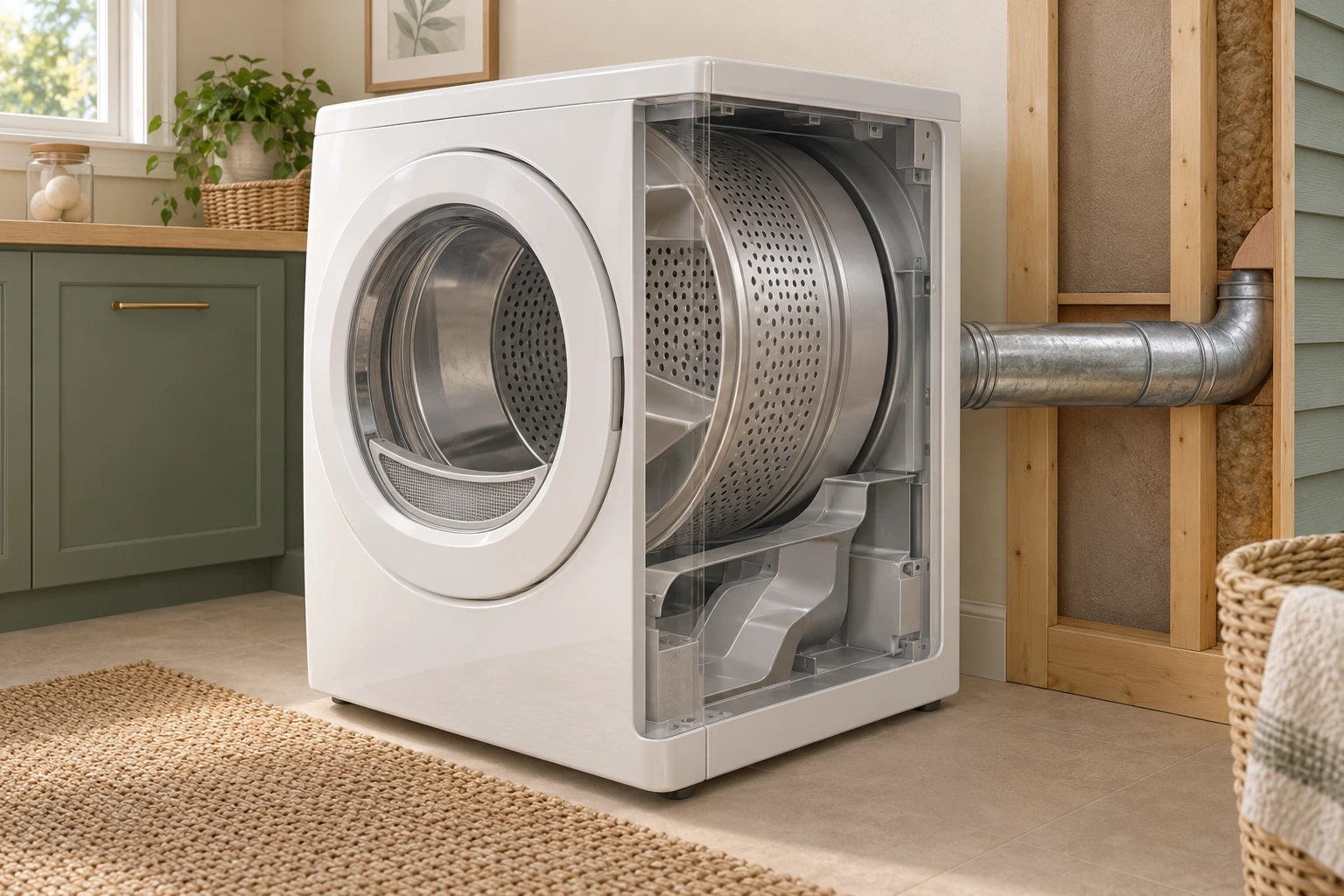
- Lint screen
The illustrated mesh form represents one filter location; use the actual model’s care instructions.
- Cabinet interior
Internal equipment and air passages are a different area from the accessible screen.
- Continuing duct
Screen care does not establish the condition or maintenance extent of the connected duct.
What does this illustration leave out?
The actual model’s screen location, internal route, required care and concealed outdoor end remain unknown. Original conceptual cutaway. The transparent shell explains locations without teaching owner cabinet removal or duct access.
Which locations did the maintenance include, and which still need an appropriate provider?
Explore this with HomeAI ↗Opens an editable question. Nothing is sent until you choose to send it.What can I learn from an outdoor hood?
If the identified hood is safely visible from ordinary ground access, note its location and visible condition. A flap moving during normal use is an observation at that opening. It does not measure airflow, identify all hidden connections or certify that the duct is clean.
Seasonal conditions matter in Canada. Health Canada advises checking exhaust vents during and after snowstorms for snow, ice or debris obstruction. If the identified end is obstructed or safely inaccessible, contact the responsible provider. A summer photograph cannot establish its condition after a winter storm.
This lesson requires no ladder, roof access, reaching through a hood, hot-exhaust contact or crossing icy ground. Raised or shared terminations belong to the authorized service scope. Exterior wall or weather-detail work may involve a building professional as well as the appliance or duct provider.
What should I write down when drying changes?
Describe the ordinary result: towels remained damp after the selected cycle, or a familiar load took longer than before. Keep load type, approximate quantity, washer spin, cycle and any displayed message together. Say whether duration was timed, shown on a display or remembered.
Add relevant changes such as relocation, new equipment, route work or different laundry care. Timing can suggest a useful question without proving cause. A complaint after moving the dryer does not establish that a concealed duct collapsed.
Use normal events already noticed; do not run comparison loads with a disconnected duct, obstruct an opening or defeat a control. Follow the matching instructions for warnings, and stop routine investigation when safety is uncertain. An active fire, suspected gas or CO alarm requires the immediate response above.
What should the appliance or duct provider’s report cover?
Name the task before authorizing it: investigate a drying change, identify the route, assess a suspected restriction or perform maintenance. Appliance diagnosis, duct cleaning and exterior termination work can be separate assignments. Ask who covers each relevant part.
A useful report names the model, method, inspected or cleaned portions, findings and inaccessible areas. If measurements are reported, keep their quantity, units, location and operating conditions with the comparison basis. Removed lint establishes material removed from stated locations; it does not automatically clear the whole system.
Ask what work addressed the original concern and how the result was checked. A better ordinary drying event is useful follow-up, while installation suitability needs its own assessment. Missing route records do not automatically justify appliance replacement; a recommendation should explain the finding it addresses.
What should the service report cover?
Checking the dryer, cleaning the duct and checking its whole air route are different jobs. Ask which parts the visit covered.
Numbers identify the parts explained below.
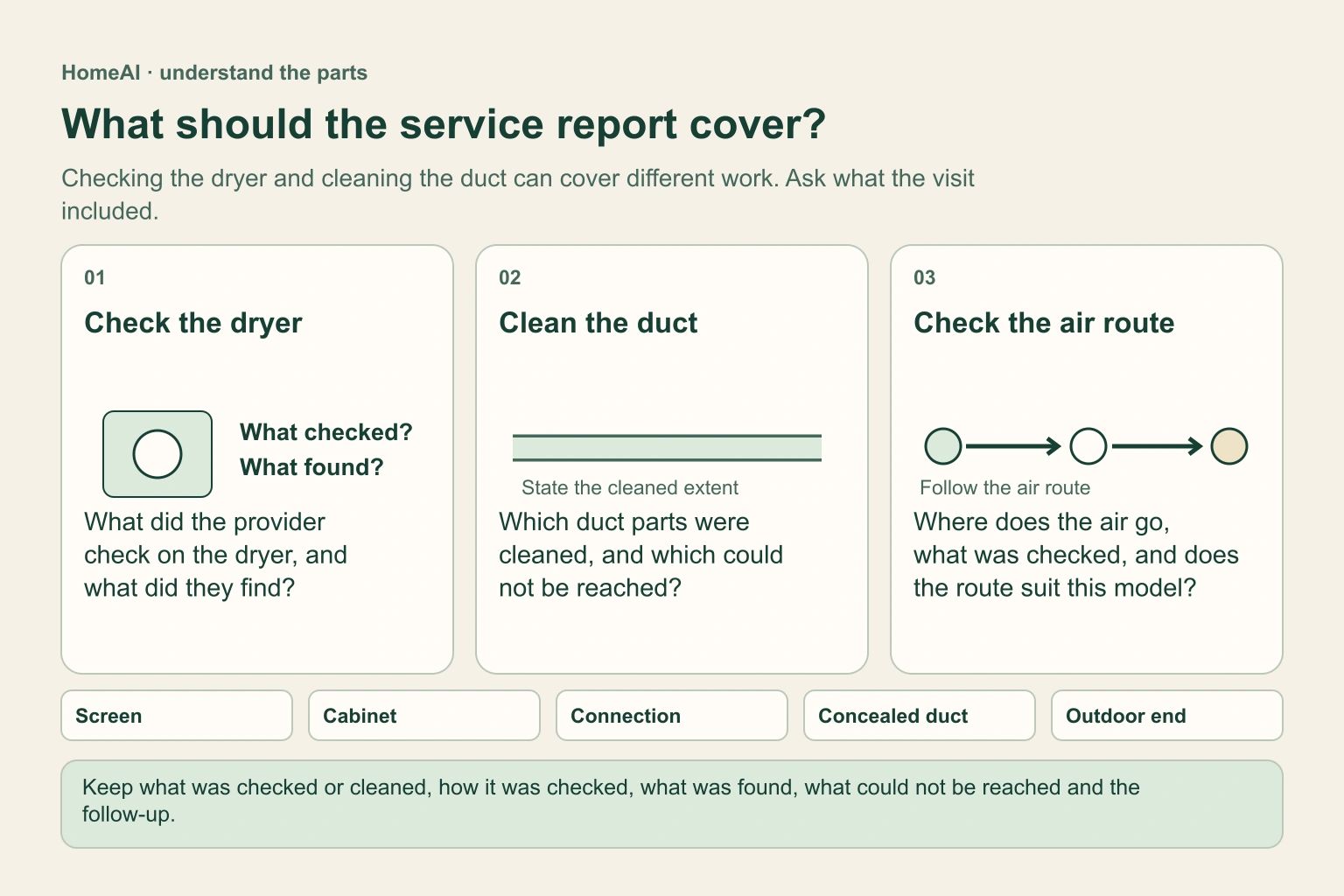
- Check the dryer
Ask what the provider checked on the dryer, what they found and whether they also checked the connection behind it.
- Clean the duct
Ask which connection, duct or outdoor-end parts were cleaned and which could not be reached. Removed lint tells you about the stated locations.
- Check the air route
Ask where the air goes, which parts were checked and how the route was compared with this model’s instructions. Keep the units, location, method and conditions with any measurements.
What does this illustration leave out?
No location has actually been assessed, cleaned or cleared here. Ask for the real work extent and follow-up. Conceptual professional-scope map only. No checklist tick, actual finding, owner dismantling step or guaranteed drying time is supplied.
Does the recorded work address my complaint and identify the relevant unassessed portions?
Explore this with HomeAI ↗Opens an editable question. Nothing is sent until you choose to send it.Read the complete picture lesson
What should the service report cover?
Urgent response comes first: If a CO alarm sounds, leave immediately for fresh air. Do not search for its source. Call emergency services from outside and return only after a professional fixes the problem.
For suspected gas, leave without indoor phone use, switches or ignition sources. Call the applicable gas emergency line or emergency services from outside.
For fire or smoke, leave, stay clear and call emergency services from outside.
A service task should name the concern and the areas it covers. Appliance assessment, duct cleaning and route assessment can have different purposes and access limits.
- Check the dryer
- Ask what the provider checked on the dryer, what they found and whether they also checked the connection behind it.
- Clean the duct
- Ask which connection, duct or outdoor-end parts were cleaned and which could not be reached. Removed lint tells you about the stated locations.
- Check the air route
- Ask where the air goes, which parts were checked and how the route was compared with this model’s instructions. Keep the units, location, method and conditions with any measurements.
Ask for the model, actual methods, inspected or cleaned portions, findings, inaccessible areas and follow-up. When a measurement is used, retain its quantity, units, location, operating conditions and comparison basis. A cleaning invoice is useful only within its stated extent; it does not automatically supply an installation or safety finding.
What remains unknown: The map establishes no actual work, condition, airflow, whole-system clearance or guaranteed cycle time.
Useful next question: Does the recorded work address my complaint and identify the relevant unassessed portions?
Ask which service task covers which location
- Appliance assessmentModel, relevant checks, findings and remaining questions. · Every hidden duct and outside hood was assessed.
- Duct maintenanceLocations cleaned and inaccessible sections. · Removed lint establishes whole-system safety.
- Route or termination assessmentConnectivity, extent, actual conditions and model comparison. · One moving flap measures the entire route’s airflow.
Who manages the route in a condo, rental or new build?
Start with authority to access the relevant spaces. The appliance owner, unit owner, landlord and building organization may have different roles. Ask for the applicable arrangement and building records before booking work in common areas. A hood beside one unit does not establish legal responsibility for it.
At new-build handover, request the model, operating instructions, route information, maintenance responsibilities and findings actually supplied. Newness does not identify concealed connectivity or the final connection after an appliance was moved. A construction drawing and the current observed arrangement answer different questions.
For a purchase or sale, distinguish supplied documents, reported care and scoped findings. A realtor may coordinate the questions, while qualified providers assess their own work. If HAUSE training or network support is proposed, confirm the actual person’s training, licence where relevant, scope and availability; do not infer a safety certification.
When do I leave the log and get urgent help?
For smoke or fire, leave, stay clear and call emergency services from outside. A burning concern, sparks or electrical damage also takes priority over finishing a comparison. Do not remove covers, restart equipment or investigate an energized appliance to locate the cause.
For a CO alarm, Health Canada’s instruction is immediate fresh air, no search for the source, an emergency call from outside and return only after the problem is fixed by a professional. An electric dryer does not clear other fuel-burning equipment in the home.
For suspected gas, leave without operating switches, using a phone inside or creating an ignition source. From outside, call the applicable gas emergency line or emergency services. FortisBC’s contact details apply to its service area. Qualified gas and appliance providers must handle the subsequent work.
Toronto’s fire guidance warns against drying articles contaminated with oils, solvents or other flammable substances, even after washing. Follow the actual appliance and fabric-care instructions. A teaching picture, service receipt or absence of visible smoke is not permission to continue using equipment with an unresolved urgent concern.
What does a fictional relocation complaint teach?
Fictional owner Arun notices that comparable towel loads need another cycle after the dryer is relocated. He records the cycle and move date and follows the matching screen-care instructions. A room photograph shows the visible connection, but no record identifies its complete path to the outdoor hood.
Arun asks a qualified provider to assess the appliance and relevant route using the actual instructions, stating access limits. The story supplies no hidden-collapse finding, airflow value, repair price or guaranteed cycle time. A changed result and a route gap explain the assignment without predetermining its answer.
If a condition is verified and work completed, Arun keeps the finding, work and agreed follow-up with the original complaint. He updates the care plan when equipment or building responsibility changes. HomeAI can organize that brief and a separately consented HAUSE request; sensitive building documents stay out of public chat.
Practice the distinction.
Arun asks about a dryer after relocation
Fictional learning scenario: familiar towel loads need another cycle after relocation, while the outdoor route remains undocumented.
Reported observations
- The model, selected cycle and move date are known.
- Screen care follows matching instructions.
- The photograph covers only the laundry-room connection.
- No hidden collapse or measured airflow is established.
Compare the explanations
Expand each possibility to see the evidence needed to distinguish it. Similar symptoms can have different mechanisms.
The connected route needs assessment
An unresolved route could matter to exhaust performance.
A confirmed route, scoped condition findings and actual-model comparison.
Load or appliance conditions also matter
A changed result can have alternatives beyond the visible connection.
A qualified appliance assessment with the recorded ordinary context.
A useful next question
Request the appliance and relevant route scope, then retain findings, completed work and agreed follow-up.
No invented cause, airflow, installation allowance, guaranteed time, repair price or safety clearance.
Know what the words mean.
- Vented dryer
- An identified appliance that sends drying exhaust through a connected route outdoors.
- Ventless heat-pump dryer
- A purpose-built arrangement using a refrigeration system to dry and recycle air, with model-specific care and collected-water handling.
- Lint screen
- A filter at its identified appliance location; its condition does not describe all internal or exhaust areas.
- Termination
- The identified end of a route, such as the outside hood of a vented dryer.
- Route extent
- The connection, duct and termination portions actually covered by observation, records, cleaning or assessment.
Questions to bring
to the conversation.
- Which model, fuel and vented/ventless arrangement are actually identified?
- Which record or assessment connects this appliance to its complete route?
- What load, cycle, washer spin or relocation change accompanied the complaint?
- Which locations were checked or cleaned and which remain inaccessible?
- Who authorizes shared-space access and which urgent-response instructions apply?
Separate a showing observation, an existing record and a new professional assessment. Unknown means a question remains; it does not automatically mean a defect.
Use the evidence planner ↗Go to the source.
Original HomeAI explanation informed by these public references. Sources support the underlying guidance; they have not reviewed or endorsed HomeAI. Diagrams are conceptual, and calculator outputs depend on your inputs.
References read for this refresh on October 5, 2026. Emergency action comes before routine learning. Whirlpool35page gas manual is an identified-model example, not a national route rule; heat-pump category is separate. Toronto guidance remains municipal prevention advice; FortisBC contacts remain local. No owner dismantling, gas/electrical work or blocked-exhaust experiment.
Publication & source review
First published .
Sources reviewed .
- Toronto Fire Services · Clothes dryers fire safety
Where this reference applies
Jurisdiction: Toronto, Ontario; municipal prevention advice
Modified March 26, 2024. Manufacturer instructions, professional service, screen care, outdoor exhaust, incoming-air questions and fire-safe use. Municipal advice is not a nationwide installation dimension or code certificate.
- Whirlpool Canada · Gas dryer owner’s manual W11361424B
Where this reference applies
Jurisdiction: Canadian-hosted manufacturer example; applicable identified gas-dryer models only
Complete bilingual 35-page PDF; ©2021/02-21 footer, PDF modified August 25, 2022. Used for qualified installation/service, airflow concerns, owner versus professional care and distinct ordinary/long-vent tables. No route allowance, clearance, electrical/gas work or installation procedure is reproduced.
- Whirlpool · Compact heat-pump dryer drying explanation
Where this reference applies
Jurisdiction: Manufacturer product-support explanation with Canadian support links; model category only
Modified June 16, 2025. Used solely to distinguish a purpose-designed ventless refrigeration/recirculation arrangement from a vented dryer. No cycle duration, electrical test, filter interval, saving or conversion instruction is reproduced.
- Health Canada · Carbon monoxide: preventing exposure
Where this reference applies
Jurisdiction: Canada
Modified November 12, 2024. CO-alarm evacuation, emergency call from outside, professional re-entry boundary and seasonal exhaust-obstruction context. No owner combustion testing or exhaustive provincial alarm-law claim.
- FortisBC · Gas leaks and odour
Where this reference applies
Jurisdiction: FortisBC gas service area, British Columbia
Leave suspected gas without using indoor phones or electrical switches or creating ignition; call the applicable utility/emergency services from outside. FortisBC contacts remain local examples, rather than a Canada-wide utility number.
Have a question about your home?
Start with the symptom, timing and what you have observed.
Ask HomeAI